This is the sort of introductory post that should really have been at the beginning, but when I began this I was in the middle of figuring out how to utilize Google’s Accelerated Mobile Pages.
I’m Larry Felton Johnson. I use my middle name to differentiate myself from the many thousands of other Larry Johnsons, including the former NBA star, and a county commissioner here in metro Atlanta.
I’m the editor and publisher of the Cobb County Courier, and a member of LION Publishers.
I started the Courier, an online-only independent news site, to cover local news in Cobb County, Georgia, adjacent to the City of Atlanta to the north and west.
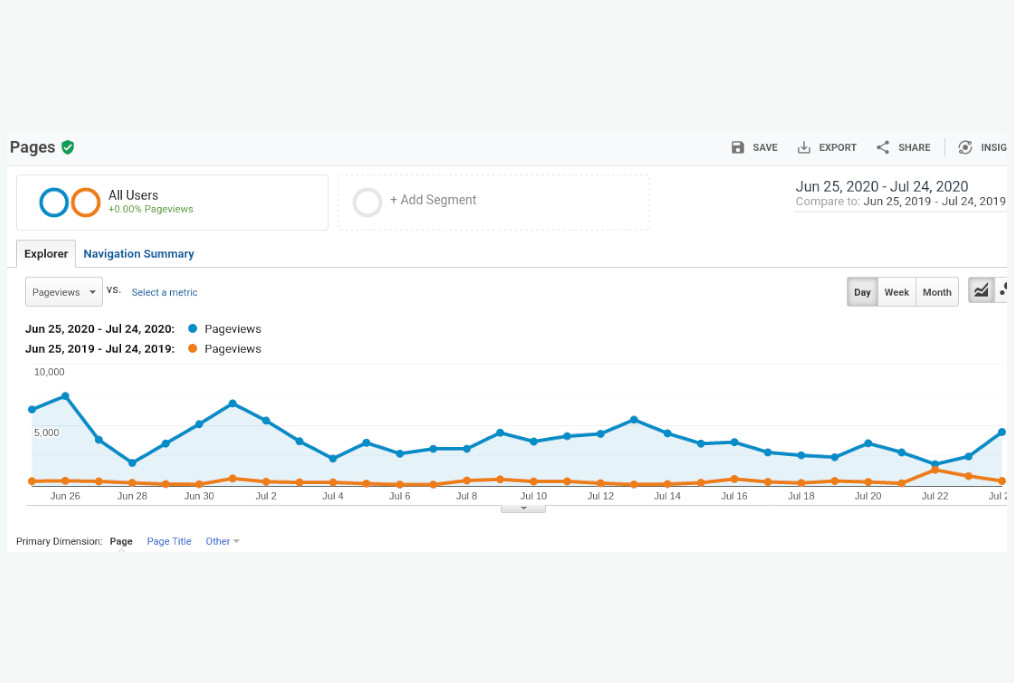
For the first three years I was in a building phase, and while I had dedicated readership, it was very small. For the first year 200 readers was a good day, in years two and three readership would fluctuate between 200 and 1,200 depending on whether any specific stories took off.
In January of this year I changed hosting platforms to help increase the speed of my page loads, started fanatically bearing down on SEO practices, and boosted our daily page view expectation to between 1,500 and 3,000, with spikes up to around 10,000.
Since most of that increase was due to a rise in Google page rank, and most of it was being sent to my AMP pages, it created an interesting dilemma I described in an earlier post.
So what’s the plan?
I’m still the only full-time staffer at the Courier. While I have a good team of freelance reporters, they are just that: reporters.
So I have to edit, report as needed, sell ads, and take care of all the social media and website development.
Doing it has given me a good idea of the things I need to do.
First let’s examine where my traffic comes from.
For the first three years the overwhelming majority of my traffic came from shared content on Facebook. Of all social media platforms I deal with, Facebook is the most hassle for the least benefit at this point, though.
Facebook will change its algorithms and yank the rug out from under small publishers in a hearbeat. They’ll set up programs that require publishers to jump through multiple hoops, and dismantle them and set up something new within a few months.
At this point I have no idea what the best practices for working with Facebook are, and since Google accounts for over 70 percent of our traffic now, I have to apply Pareto’s 80/20 Principle, and put my immediate effort into making use of the Google traffic.
Google, particularly via the AMP traffic, is the main source of traffic to my site, and I have to take it the most seriously.
But I can’t afford to rely on Google to be a consistent and stable partner any more than I can Facebook. Google commands a huge share of the ad revenue, and the amount they pass along to publishers through their Adsense program is pathetic.
So what does that mean for me?
I have no control over Facebook, I have no control over Google. The thing I do have control over is the Courier’s periodic newsletter.
At the moment the newsletter is sent weekly, and has fewer than a thousand subscribers, even though its free.
So in keeping with Pareto’s rule, I need to improve the newsletter to make it valuable to the subscribers, and increase the subscriber base by at least a factor of 10. In a county of 760,000 people that’s not a far-fetched goal.
So I’ve been working on capturing newsletter sign-ups via the AMP articles as a first step. It took me a few weeks to figure out how to do it, and now I need to refine the pitch I’m presenting on the AMP in-article pitch.
Even with my Facebook presence I need to put the remaining 20 percent of effort guided by the Pareto Principle into funnelling readers into the newsletter.
So my plan is to build the newsletter using mostly Google, but also Facebook,
So I need to:
- Make sure that first-time visitors to my site always see the newsletter signup pitch
- Make sure there’s compelling material in the newsletter to entice readers to visit the Courier site
- Spend most of the effort getting the AMP signup form right
- But also not totally drop my efforts to encourage Facebook users to sign up for the newsletter
Of course there’s a lot more to the strategy than that, much of it geared toward creating a regular loyal readership. But that is for future posts.
 Publishers Notebook